English army
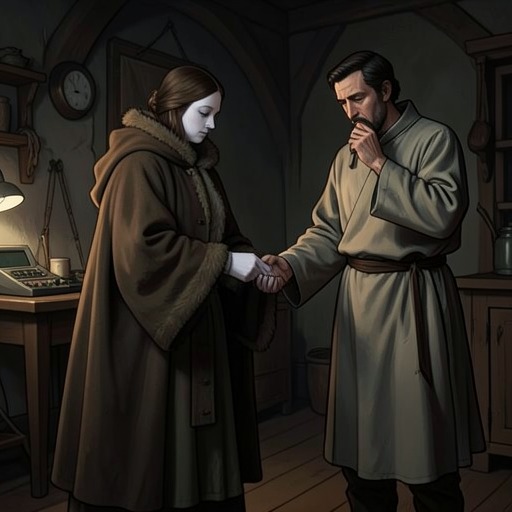
The King's CurseThe English army in the novel is not simply a force that fights abroad: its campaigns depend on the less celebrated work of mustering, transport, provisioning, and command. In 1513, Henry VIII leads an expedition against France, while Thomas Wolsey organizes its practical machinery. When Scotland invades during the king’s absence, the army’s presence overseas becomes a danger to the kingdom at home, and Katherine of Aragon takes an active role in arranging its defense. The army’s movements thus expose the political and logistical demands of war, as well as the authority exercised by those who direct it.
Mobilization and preparation
In the summer of 1513, the court’s attention turns to the army’s preparations: harnesses, armor, horses, and provisions. Wolsey proves particularly capable of making the campaign operational. He orders goods to the places where they are needed, oversees the mustering of troops, and directs smiths to forge pikes and saddlers to make leather jackets. The account stresses the unglamorous work of transport, supplies, and timing. These are not incidental arrangements: they are what allow an army to assemble and move, and Wolsey devotes himself to their coordination.
Preparation also reaches into the queen’s household. The ladies of Katherine’s chamber sew banners and keepsakes, along with tough shirts intended to be worn beneath chain mail. These tasks place the women’s work alongside the army’s material readiness, without suggesting that every participant holds the same role. Katherine herself meets with Henry’s commanders to discuss provisions, discipline, and the health of the troops. Wolsey is especially receptive to her advice, recognizing that her upbringing amid warfare gives her experience relevant to the campaign.
The expedition against France
The army sets out through Kent with the court and travels slowly toward the coast. At Canterbury, the company stops to pray at the Shrine of Thomas Becket at Canterbury for England’s victory. The scene links the expedition’s practical preparations with religious observance: the army is mobilized for a campaign that the narrative presents as carrying both political and spiritual meaning for Henry VIII.
The campaign goes better than expected. Under Henry VIII’s leadership, the English army takes Thérouanne, and the French cavalry flee before it. News reaches the narrator through a letter from her son Arthur: his brother has ridden bravely and the king has knighted him for his conduct in battle. The report makes the expedition’s success personal to the family, while also showing how information about the campaign reaches those at home. The narrator’s relief that her son Montague, now Sir Henry Pole, is safe follows the news of military achievement with a reminder of the risks borne by individual members of the army.
A kingdom exposed at home
The army’s success in France coincides with a crisis in England. Soon after Henry’s fleet sails, James IV of Scotland invades, despite the peace sealed by his marriage to the king’s sister, Margaret Tudor. England must defend itself while its army is in France and Henry is overseas. The expedition has therefore divided the kingdom’s available military leadership: the king and the army are committed to one campaign, while a new threat requires a response at home.
The account describes Richmond Palace changing from a courtly setting into a center of military planning. In place of music and dance plans, maps of England and Scotland, muster lists, and the names of landlords expected to provide tenants for the queen’s war are spread across the table. The queen’s ladies report on the household men and the state of their border castles. This work connects the army’s defense to local obligations and information gathering, showing how the response depends on more than troops already assembled in the field.
Command and the army’s wider significance
With Henry VIII in France, Thomas Howard, Earl of Surrey, is the senior commander left in England, and Katherine works with him to organize the defense. Their plan is to attack the Scots in the north while Katherine holds a second line in the Midlands in case Howard is defeated. The arrangement gives the army’s deployment a contingency: the defense is not limited to a single advance, but includes a prepared position farther south.
Katherine’s contribution is presented as command rather than ceremony. Despite being pregnant, she rides out to the army on a white horse, dressed in cloth of gold, and addresses the soldiers. The narrator contrasts this queen with the homesick young woman she once knew at Ludlow, seeing in her a ruler able to understand the dangers of battle and the deployment of troops. The English army consequently serves as the setting in which Katherine’s authority becomes visible, while its simultaneous presence in France and need at home dramatize the strain of defending a kingdom on two fronts.